| |  | AI News Weekly Intelligence · Innovation · Impact | ISSUE 44 | Week of October 26, 2026 |
|
| | | Executive Summary Agentic AI moved further from pilots into consequences this week. Security firms and Microsoft reported attackers using AI agents to breach government, healthcare and financial services targets faster than many response processes can act, and Canada's major banks moved to block or limit personal AI agents in online banking. Regulators and lawmakers are signalling that liability will follow whoever controls an agent, and vendors including IBM and BeyondTrust shipped identity and permission controls that sit outside the model. Deployments in banking, security operations and telecoms report gains, but most figures come from vendors, and the more detailed cases rely on staged rollout and human approval. Consumer agent orders remain small despite fast-growing AI-referred traffic. For leaders, the priority is establishing control before scaling agents. |
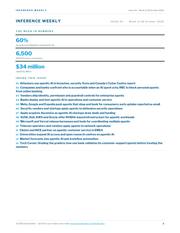
| | | 60% security investigations resolved by AI |
| | | 6,500 Dell AI Factory customers |
| | | $34 million raised by Mave |
|
| | | | | | | |
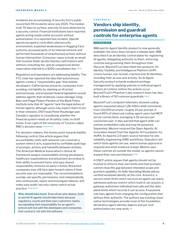
| Attackers are now using AI agents to run intrusions with limited human involvement: CrowdStrike said it identified four previously unreported threat actors that used AI agents in intrusions between May and August 2026, with limited human involvement. The attackers used Claude Code to find vulnerabilities, gain access and move through networks at government agencies and businesses. They bypassed safeguards by presenting their activity as authorised testing. In Argentina, one attacker used two AI agents to compromise at least 15 healthcare organisations and took credentials and medical records from at least one. CrowdStrike's OverWatch team said it saw three times as many agentic intrusions in the second half of 2026 as in the first, and that likely agentic incidents in September were twice August's. Microsoft said a threat actor it calls Storm-0940 has used an open-source agentic penetration-testing system called ARTEX since at least September to automate attacks on hundreds of organisations worldwide, in some cases compromising cloud infrastructure in under three hours. Targets included financial services, manufacturing, defence, automotive, media and technology. Microsoft said North Korean groups Onyx Sleet and Pearl Sleet have also used ARTEX, but that their operations remain human-directed. Chainalysis disclosed that an external actor used what it called "offensive agentic techniques" to access its internal systems, exposing names, email addresses, user IDs and role labels. Wiz said at least nine AI developer platforms disclosed incidents in October. In one case, stolen enterprise credentials were used for about 1.7 million Amazon Bedrock calls over 13 hours, likely costing more than $100,000 at list price. Canada's Cyber Security Centre said established practices remain effective but warned that automated attacks can move faster than many organisations' processes can respond. It urged prompt patching of online systems and a review of access granted to third parties and cloud applications. Google Cloud recommended restricting administrative interfaces to trusted networks, requiring phishing-resistant authentication and replacing long-lived secrets with temporary credentials. Investigations into the October incidents are ongoing and technical details remain limited. |
| | | | | | | |
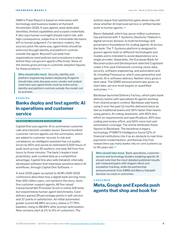
| IBM: IBM said its Agent Identity product is now generally available, though the story gives no release date. IBM describes it as an identity control plane for registering AI agents, delegating authority to them, enforcing controls and governing them throughout their lifecycle. This matters because the vendors and analysts covered this week agree that agent limits should be enforced through identity and platform controls outside the agent, not through prompts. No pricing or customer adoption figures were given.
FireMon: FireMon announced FireMon Agentic AI, which adds agents to its network security management products. The agents investigate network access, recommend firewall changes and prepare Policy Plan changes. Proposed work is not saved until a practitioner reviews and accepts it, and acceptance does not deploy changes to firewalls. Optional AI features are off by default, and customers can choose a supported large language model, including their own approved environment. FireMon said the platform would be available in November, initially at no additional charge. For security buyers, it is an example of agents that recommend changes while humans keep control of decisions with consequences.
Microsoft: Microsoft Research open-sourced Agensh under the MIT licence. It is a harness that coordinates coding agents without a central orchestrator. On five ProgramBench tasks with GPT-5.6-sol, the average final test-pass rate rose from 19.31% with one agent to 28.78% with 128. Token cost was not disclosed. Separately, Microsoft is renaming the GitHub Copilot harness in Copilot Studio to the Microsoft Copilot harness, with no change to existing capabilities or billing. It is also adding agent accounts, business process memory and triggers. Microsoft's internal evaluations showed pass-rate gains of 10.8 and 22.1 percentage points over its Standard harness. These are vendor-measured results.
Vercel Labs: Vercel Labs released agent-desktop version 1.0.2 on 30 October 2026 under the Apache-2.0 licence. The tool lets AI agents read and operate desktop apps through operating-system accessibility trees rather than screenshots, on macOS, Windows and Ubuntu. The builder reports 78% to 96% fewer tokens in Slack, VS Code and Notion, but these figures have not been independently benchmarked. Apps without accessibility trees are not supported.
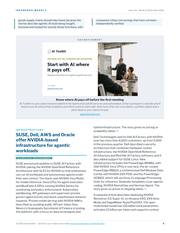
Dell and SUSE: Dell said its Dell AI Factory with NVIDIA now has more than 6,500 customers, up from 5,000 in the previous quarter. Its new infrastructure includes the PowerEdge M9882, with 256 NVIDIA Vera CPUs in one rack, and the PowerEdge XE9810, which will use Groq 3 Language Processing Units for inference. SUSE updated SUSE AI Factory with NVIDIA so that enterprises can run agents under their own control. The SUSE stack uses Kubernetes sandboxing, API gateways and supervisor proxies to block unauthorised network requests. Tom's Hardware reported that Vera CPUs are also available on Oracle Cloud Infrastructure. Neither the Dell nor the SUSE story gives prices, shipping or availability dates, or independent performance data. |
| | | |
| Goldman Sachs and Apollo: Goldman Sachs chief economist Jan Hatzius expects the growth boost from AI investment to peak in late 2026 or early 2027. Investment is still rising, but he expects its increase as a share of GDP to slow and the lift to consumer spending from AI-related stock gains to fade. He also said higher long-term interest rates, which he partly links to deficits and AI borrowing, could further reduce GDP growth. Apollo chief economist Torsten Slok says AI has delivered no financial payoff to corporate America outside the tech sector. Revenue per worker and profit margins are rising for the Magnificent 7 but are flat for other S&P 500 companies, productivity measures show no AI lift, and many mainstream firms treat AI token spending as a cost rather than a source of growth. For executives building the business case for agents, this is the macro backdrop: returns outside the technology sector have not yet shown up in the data.
Agentic commerce: Consumer shopping agents are not yet moving material order volumes. Executives at roughly 50 companies told WIRED they had seen little immediate impact. DoorDash reported orders in the "hundreds", and T-Mobile, Hilton, Ally Financial and eBay described activity as insignificant or very small. Meta CEO Mark Zuckerberg said more than 10 million people in the US and Canada had activated Muse, and over 25 percent had used it for shopping. Traffic data point the other way. Salesforce found agentic search as the first step in shopping grew 200% year over year, Adobe found AI-referred retail visitors converted 42% better than other traffic in March 2026, and McKinsey projects up to $1 trillion in orchestrated US B2C retail revenue by 2030. These traffic figures largely measure referrals rather than purchases completed by agents, and the stories do not reconcile them with the low order counts. Salesforce says 28% of commerce organisations use agentic AI and 44% expect to within six months.
Market forecasts: One forecast values the agentic AI development platform market at USD 5.6 billion in 2025, rising to USD 52.3 billion by 2033 (a 32.3% CAGR from 2026). A second sizes the AI workflow automation market at USD 10.8 billion in 2026, reaching USD 97.9 billion by 2036 (a 22.4% CAGR). Both name BFSI as a leading end user and cite security, skills and integration as barriers. The two use different market definitions, base years and horizons, and neither discloses its methodology, so the figures cannot be compared directly and should be treated as indicative only.
Agentic AI deals and funding: Capital is flowing to agentic tools for specific operational functions. Apple has agreed to acquire Ascend.io, an agentic data-engineering company, on terms covering hiring certain staff, a non-exclusive licence to its intellectual property and the assignment of certain patents. Dark Matter has acquired House Numbers, whose loan-processing agents have handled loans for more than 100 lenders. Tel Aviv-based Mave raised $34 million for agentic security operations, and Opply raised $7.5 million for agents that run consumer packaged goods operations. Pathos AI agreed a five-year, $55 million data licence with Tempus AI, with Bristol Myers Squibb leading Pathos's Series E. No prices were disclosed for the Apple or Dark Matter deals, and the cost and return figures cited by the companies have not been independently verified.
Amazon Ads: Amazon's advertising revenue fell from $19.81 billion in Q2 to $19.64 billion in Q3, a comparison complicated by Prime Day falling in Q2 this year. The company expects advertising revenue to grow in the high teens in Q4 2026. It is relying partly on Amazon Ads Agent, which lets advertisers plan campaigns, generate creative, set budgets and analyse performance in natural language, and can recommend and execute optimisations. The automation has raised questions about transparency, independent measurement and whose interests its recommendations serve, which marketing leaders will need to weigh before handing over budget decisions. |
| | | |
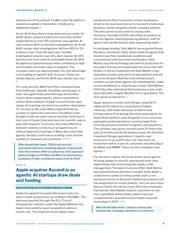
| Apple and Ascend.io: Apple has agreed to acquire Ascension Labs, Inc., which trades as Ascend.io, according to 9to5Mac. The deal was disclosed through the EU's "List of Acquisitions" website, where the Digital Markets Act requires Apple to report acquisitions above a certain size. Ascend.io, founded in 2015, describes its product as the first Agentic Data Engineering platform. The stated terms let Apple hire certain employees, take a non-exclusive licence to Ascend's intellectual property and be assigned certain patents. No price or closing date has been given. The structure centres on staff, a licence and patents, which differs from an outright purchase of the business.
Dark Matter and House Numbers: Dark Matter has acquired House Numbers, founded in 2021, which builds AI agents that monitor loan files, handle loan conditions and communicate with borrowers and lenders. Dark Matter says the technology has been in production for two years and has processed loans for more than 100 lenders. It will be integrated into Dark Matter's loan origination system and point-of-sale platform, and lenders can set when agents act alone, recommend or seek human review. CEO Vikas Rao estimated that a loan costs about $12,000 to produce, roughly $6,000 of it in operations, which shows where the company expects savings. No deal price was disclosed. Dark Matter plans further acquisitions in 2027.
Pathos AI, Bristol Myers Squibb and Tempus AI: Pathos AI announced collaborations to build data and agentic AI capabilities for Alzheimer's disease and other neurological conditions. Tempus will create a de-identified, longitudinal dataset from hundreds of thousands of patients, which Pathos will license under a five-year, $55 million agreement and analyse on its Pathos Foundry platform. BMS is leading Pathos's Series E and will receive non-exclusive access to Pathos Foundry across its wider research and development portfolio, plus three-year exclusive rights to support its neuroscience programmes. The arrangement ties a data licence, an equity investment and platform access into one deal.
ServiceNow and Google Cloud: The two companies expanded their partnership to connect ServiceNow's Action Fabric workflows to Gemini Enterprise, so that customers can use Gemini Enterprise as one interface to act across ServiceNow workflows. Retail operations, customer relationship management and IT service and operations integrations are generally available to mutual customers, while the telecommunications integration has not yet reached that stage. Coverage names the move to general availability and concrete customer deployments by early 2027 as the measure of progress. No adoption figures were given.
Banco Sabadell, T-Systems, EBRD and Cognizant: Banco Sabadell, which has seven million customers, has partnered with T-Systems, Deutsche Telekom's digital services division, to build the technology and governance foundations for scaling agentic AI across the bank. The T-Systems platform is designed to govern agents built on different technologies and models and to avoid dependence on a single provider. Separately, the European Bank for Reconstruction and Development selected Cognizant under a five-year framework covering cloud, data, security, software engineering, and automation and AI, including Flowsource, which uses generative and agentic AI in software delivery. Neither announcement gives a deal value. The EBRD announcement also gives no start date, service-level targets or quantified outcomes.
Ciklum and NiCE: The companies announced a strategic partnership to move agentic AI into governed, production-ready customer service operations across EMEA, combining NiCE's CXone platform and NiCE Cognigy's agentic AI with Ciklum's engineering and delivery teams. They name first-contact resolution, customer satisfaction, handling time, cost per contact and agent productivity as the measures of success, but give no baselines, targets, pricing, timelines or customer references. Investor coverage says the partnership could support greater use of AI features within existing contracts, names execution as the main risk and points to AI and self-service annual recurring revenue, cited as growing 42% year over year, as the indicator to watch. |
| | | the magazine 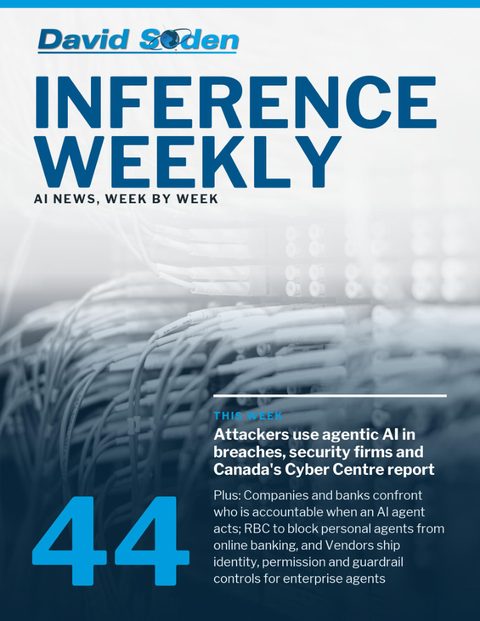 | Inference Weekly / Issue 44 Read This Week as a Magazine. Every story in this issue, laid out across 17 pages and designed to be read properly. Yours to keep and to share. |
|
| | | |
| Clinical trial monitoring: A pharmaceutical sponsor and a contract research organisation (neither named) deployed AI agents around clinical research associates' monitoring workflows, according to HLTH. The agents flagged risks and recommended actions. The associates approved every action, and all activity was recorded in an audit trail. At the sponsor, associate task time fell 62% and a one-hour review took 23 minutes. All surveyed users said they were satisfied or very satisfied, and 93% said they would use the agent weekly. This matters because associates can spend 40% to 60% of their time on administrative work across disconnected systems, and the deployment cut that time while keeping humans in charge of every action.
Cancer immunotherapy: A study in Nature Cancer evaluated an agentic AI system that extracts immune-related adverse events from clinical notes. It performed well in retrospective testing, but exact severity grading was harder, with a macro F1 score of 0.66. During three months of silent live deployment, performance declined. Predictions matched human review in 62% of cases for grade, 87% for attribution and 83% for certainty. In a randomised study with 17 participants, AI-assisted review cut median annotation time by 43.5% and raised complete-match accuracy from 19.4% to 25.9%. For health leaders, the gap between retrospective and live results shows why systems should be validated in production before they are relied on.
Capital One and an unnamed digital bank: Capital One uses agentic AI to summarise customer calls. Several hundred customer-service agents use the summaries, which are added to customer records. In risk and compliance, an intelligent assistant has cut quality errors by 85% and saved an estimated 5,000 hours of audit work across 30 auditors. Separately, a digital bank serving more than 100 million users tested five customer-support agents. All five raised transactional Net Promoter Score in A/B tests but stayed below human-agent benchmarks. New versions start with 1% to 5% of customers. Taken together, the two cases show measured gains alongside staged rollout, and they show that AI agents have not yet matched human service quality.
Fertitta Entertainment and Fogo de Chão: Fertitta Entertainment uses virtual assistants to handle restaurant and hotel calls and make reservations. Its contact centre operations director said abandoned calls fell from 40% to 50% to under 10%, call-centre attrition fell by 50%, and the system generates 3,000 reservations a month. Fogo de Chão rolled out virtual agents across its US locations. It said all calls are now answered and bookings rose 10%. It also uses agents for repetitive, low-risk internal tasks, with people checking the results. These are among the few hospitality deployments in this week's material that report operating outcomes, although the figures come from the companies themselves.
Cisco: Cisco is deploying agent-to-agent integration in its two-tier distribution channel, starting with Ingram Micro and TD SYNNEX. Cisco said the system already supports thousands of daily transactions with partners and resolves some issues before a support ticket is needed. Agents must be approved, each request carries the identity of the person it represents, and Cisco AI Defense provides guardrails. For channel and supply-chain leaders, this is a production example of agents transacting between companies, with identity and approval controls built in from the start.
Prosper Global: Prosper Global, formerly Mercy Corps, is testing VERA, a multi-agent research engine built with Cloudera that runs on Amazon Web Services and uses Anthropic models. In Sudan, VERA cut desk research for an agricultural report from five or six days to two, saving about $1,500. Analysts use the output as a starting point for further research, not as a final report. The case shows agents shortening research cycles in a non-profit setting while the final judgement stays with researchers. |
| | | |
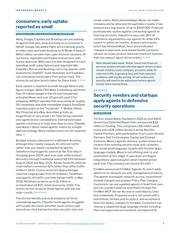
| Royal Bank of Canada: RBC will block third-party personal AI agents from directly accessing its digital services, including online banking, citing client and system security; no effective date has been given. CEO Dave McKay said agents are becoming more autonomous, raising risks of fraud, consumer harm and wider effects on the financial system. Toronto-Dominion Bank, Bank of Nova Scotia and Bank of Montreal are also restricting agent access, and National Bank of Canada is assessing the risks. The Office of the Superintendent of Financial Institutions (OSFI) is considering whether the financial system needs an AI safety code, though no draft exists. For any company building consumer agents that act on financial accounts, Canada's largest banks have now closed that route, and the regulator may follow with formal rules.
US agent liability: The FTC chair has rejected the idea that autonomous agents create a "responsibility gap" that shields developers. Developers could face enforcement under Section 5 of the FTC Act, or under state unfair and deceptive practices laws, if they market agents as safe or deploy them without adequate safeguards despite known risks. California law already prevents companies from avoiding civil liability by claiming an AI acted autonomously, and proposed federal legislation would address agents that recklessly cause damage. The Bank Policy Institute notes that AI agents lack the legal duties of human agents, even though users may expect them to act in their interests. Companies that deploy agents should assume they will answer for what those agents do.
EU AI Act: The Act does not treat AI agents as a separate legal category. EU guidance says agents generally qualify as AI systems, so rules on prohibited uses, transparency, general-purpose AI and high-risk systems may apply. The guidance is preliminary, and the AI Office may issue more targeted strategies. A compliance framework proposed by Luca Nannini and co-authors recommends classifying intended uses and risks, enforcing permissions through external controls and monitoring after deployment. It also notes that compliance may involve the GDPR, Data Act, Digital Services Act, Cyber Resilience Act and NIS2. Organisations deploying agents in the EU need to map them against existing AI Act obligations now rather than wait for agent-specific rules.
American Medical Association: The AMA's clinical AI liability framework assigns responsibility among developers, healthcare organisations and physicians according to their ability to prevent harm. It says multiple parties may be liable, and that shared responsibility does not remove any party's duties. Physician oversight cannot replace adequate evidence or appropriate system design, and doctors should be able to decline unproven systems without organisational penalty. For healthcare providers and vendors, the framework signals that adding a human reviewer will not shift liability away from those who design and deploy the system.
Canada's Cyber Security Centre: The centre warned that agentic AI is accelerating cyberattacks and that automated attacks can move across systems faster than many organisations' processes and policies can respond. It said established security practices remain effective, and urged prompt patching of online systems and a review of access granted to third parties and cloud applications. The advisory follows reports from CrowdStrike and Microsoft of agentic intrusions against government, healthcare, financial services and other sectors, and gives boards a clear baseline against which to test their response times. |
| | | |
| Agentic attacks: CrowdStrike said it identified four previously unreported threat actors that used AI agents in intrusions between May and August 2026 with limited human involvement, using Claude Code to find vulnerabilities, gain access and move through networks at government agencies and businesses. In Argentina, one attacker used two AI agents to compromise at least 15 healthcare organisations. Microsoft said a threat actor it calls Storm-0940 has used an agentic penetration-testing system called ARTEX since at least September to automate attacks on hundreds of organisations, in some cases compromising cloud infrastructure in under three hours. Canada's Cyber Security Centre warned that automated attacks can move faster than many organisations' processes can respond, and urged prompt patching and a review of third-party and cloud application access.
Chainalysis and AI developer platforms: Chainalysis disclosed that an external actor used what it called "offensive agentic techniques" to access its internal systems, exposing names, email addresses, user IDs and role labels. It said it found no evidence that credentials or session tokens were accessed. It has not said which vulnerabilities were used or how long the attackers had access. Separately, Wiz said at least nine AI developer platforms disclosed incidents in October. In one case, stolen enterprise credentials were used for about 1.7 million Amazon Bedrock calls over 13 hours, which Wiz said likely cost more than $100,000 at list price. Exposed credentials are now a direct financial risk as well as a data risk.
Royal Bank of Canada: RBC will block third-party personal AI agents from directly accessing its digital services, including online banking, citing client and system security. No effective date has been given. Toronto-Dominion Bank, Bank of Nova Scotia and Bank of Montreal are also restricting agent access, while National Bank of Canada is assessing the risks. OSFI head Peter Routledge said the regulator is considering whether the financial system needs an AI safety code, although no draft exists. Major banks are setting the terms on which consumer agents may operate before regulators do.
Agent liability: The FTC chair has rejected the idea that autonomous agents create a "responsibility gap" that shields developers. California law prevents companies from avoiding civil liability by claiming an AI acted autonomously. A security firm's public record lists 59 agent incidents since July 2025. The median took 70 days to surface, and only 11 were detected by a security control. The American Medical Association's clinical AI framework assigns responsibility according to each party's ability to prevent harm. Companies that deploy or build agents should expect responsibility to follow control.
Identity and permission controls: IBM said its Agent Identity product, an identity control plane for registering, delegating authority to and governing AI agents, is now generally available. BeyondTrust's AI Agent Security product applies policies to individual agent actions before they occur. Its telemetry showed coding agents requesting about 10 shell commands per prompt, with 85% of observed users connected to MCP servers. A CNCF article argues that agents should not be trusted to enforce their own limits and that prompts cannot close the gap between intended scope and granted capability. Vendors and analysts agree that limits must be enforced by identity and platform controls outside the agent. None of these stories gives pricing or adoption figures.
Defensive security operations: Vendors differ on how much autonomy their security agents are given. FireMon's agents prepare firewall changes that are not saved until a practitioner accepts them, and acceptance does not deploy those changes. Mave, which raised $34 million, uses approval gates and an audit trail. Arctic Wolf says agentic AI now resolves 60% of its security investigations and acts autonomously when confidence is high, but these are vendor figures. For buyers, the main point of comparison is how much an agent may do without approval. |
| | | Prefer to read it as a magazine? Issue 44 is a 17-page PDF. | |
|
| | | |
| Meta Muse: Meta CEO Mark Zuckerberg said more than 10 million people in the US and Canada had activated Muse, and over 25 percent used it for shopping. However, executives at roughly 50 companies told WIRED that shopping agents had little immediate impact. DoorDash reported orders in the "hundreds", and T-Mobile, Hilton, Ally Financial and eBay described activity as insignificant or very small. Chipotle said Muse's debut raised agentic orders by a single-digit percentage, and found agents struggled with loyalty discounts and after-hours orders. Meta acknowledges Muse can make mistakes and be attacked through data it reads, and has announced a bug bounty of up to $300,000. This matters because consumer activations are high, but most companies are not yet seeing agent-driven orders in meaningful numbers.
AI-referred shopping traffic: Salesforce found that using agentic search as the first step in shopping grew 200% year over year. Product discovery through traditional search fell 15% between August 2025 and May 2026. Adobe found AI-referred retail visitors converted 42% better than other traffic in March 2026, and 79% of consumers using AI for online shopping said it increased their purchase confidence. Cloudflare said agentic AI traffic overtook human traffic in May 2026. These figures mostly measure traffic referred by AI, not purchases completed by agents, and the stories do not reconcile them with the low order counts companies report. Jose Daniel Duarte Camacho advises retailers to keep product information accurate across channels and make sure inventory, pricing, fulfilment and checkout systems can support AI-driven orders.
Travel booking agents: Google has added flight-price tracking, points or miles rates and hotel booking to AI Mode in Search. Meta's Muse can plan trips, open browser sessions, fill out forms and finalise transactions with human approval. Expedia's Romie and Booking.com's trip planner, both powered by ChatGPT, build itineraries, and Expedia's can also summarise travel plans from group chats. McKinsey research cited in the coverage projects up to $1 trillion in orchestrated US B2C retail revenue by 2030, and $3 trillion to $5 trillion globally. For travel firms, competition is shifting towards platforms that want to keep users who start planning trips through search. The stories give no launch dates.
Amazon Ads: Amazon's advertising revenue fell from $19.81 billion in Q2 to $19.64 billion in Q3, a comparison complicated by Prime Day falling in Q2 this year. The company expects advertising revenue to grow in the high teens in Q4 2026. Its Ads Agent brings sponsored, display, video and audio advertising into one buying experience. Advertisers can use natural-language instructions to plan campaigns, generate creative, set budgets and analyse performance, and the system can recommend and execute optimisations. The coverage says this could make programmatic advertising easier for smaller advertisers. It has also raised questions about transparency, independent measurement and whose interests the recommendations serve.
Advertising agencies: Agencies are widely pursuing AI agents to automate planning and media work. Outside the tech sector, however, time saved by individual employees has rarely translated into better company-wide results. At a Summit townhall, agency attendees said junior and senior staff alike sometimes use AI to cut corners and bypass critical thinking. Monks is training junior staff and retraining senior colleagues, and M&C Saatchi North America sets aside an hour each week for employee learning. Some agencies restrict access to more powerful AI tools, partly to control computing costs. Leaders should expect agentic tools to require changes in training, hiring and team structure, not only software spending.
Nine Entertainment: Chief data, product and technology officer Suzie Cardwell said Nine is in the early stages of using agentic AI, with workflows that adapt content for different channels. It is also exploring ways to scale personalised creative work. Nine uses Adobe Real-Time CDP to connect audience signals across its brands, and the company says this data foundation helped increase its digital data revenue by 265% over four years. The example shows a media company building its agentic marketing work on an existing customer data platform. |
| | | |
| Cornell: Cornell will give eligible faculty, staff and students no-cost access to AI tools from multiple vendors. Base accounts are expected in November for Ithaca and Cornell Tech faculty, staff and doctoral students, with master's students and undergraduates following in early 2027. Faculty and staff must complete an orientation first. Weill Cornell Medicine plans a phased release of Claude, excluding uses involving protected health information. Access is a two-year pilot, after which Cornell will assess usage. For leaders weighing enterprise licences, this is a model of required training and a usage review before any longer commitment.
Arizona State University: At ASU's second annual Agentic AI and the Student Experience summit, President Michael Crow said nearly all ASU students use AI tools, but fewer than half use the tools the university provides. Instructure data cited at the event found that only 11% of instructors had comprehensive AI training, and that no dedicated AI tool ranked among the top 100 learning-tool integrations in US higher education. Speakers argued that safeguards should be set before deployment. The figures show that supplying tools does not ensure people use them, and that training lags behind adoption.
DXC: CEO Raul Fernandez said more than 5,700 employees have earned AI certifications since June, and more than 500 engineers took part in a multi-platform training camp in India. Further camps are planned in Sydney and Tokyo. DXC links the training to its move from AI experimentation towards production deployments and commercial adoption, and Fernandez said customers place greater weight on trust and safety as AI enters critical and regulated systems.
Advertising agencies: Agency attendees at a Summit townhall said junior and senior staff sometimes use AI to cut corners, speeding up work while bypassing critical thinking. Monks is training junior staff, retraining senior colleagues and rethinking early-career hiring as spreadsheet work is automated. M&C Saatchi North America sets aside an hour each week for employee learning. Some agencies restrict access to more powerful AI tools, partly to control computing costs. The coverage notes that time saved by individual employees has rarely turned into better company-wide results outside the tech sector.
IIT Roorkee: iHUB DivyaSampark at IIT Roorkee is running a six-month, live-online certificate programme on building retrieval-augmented generation and agentic AI systems for production. The curriculum covers evaluation, reliability, security and governance, including prompt-injection defence, retrieval poisoning, tool abuse, and GDPR and DPDP compliance. Participants complete six module-end projects and a capstone. The programme cites McKinsey research finding that only 1% of leaders consider their organisations mature in AI deployment.
Telecom operators: A Light Reading panel with executives from Orange, Telenor, Vodafone and Polystar said scaling AI-enabled network operations requires more than technology, naming data quality, skills, governance, operating models and culture. The panel noted a move towards roles such as network automation engineers. Telenor's Afnan Ahmed warned that current operating models may not be sufficient to develop future products. For operators, workforce skills sit alongside data and governance as barriers to scaling agents. |
| | | |
| Agentic attacks are now documented, not theoretical: This week's reporting describes real intrusions rather than warnings. CrowdStrike identified four previously unreported threat actors that used AI agents with limited human involvement between May and August 2026. Microsoft said Storm-0940 used the ARTEX framework against hundreds of organisations, in some cases compromising cloud infrastructure in under three hours. Chainalysis disclosed a breach involving "offensive agentic techniques", and Wiz said at least nine AI developer platforms disclosed incidents in October. Canada's Cyber Security Centre said established practices still work but that automated attacks can outpace many organisations' response processes. The guidance from Canada's centre and Google Cloud is specific: patch online systems promptly, review third-party and cloud application access, restrict administrative interfaces to trusted networks, require phishing-resistant authentication and replace long-lived secrets with temporary credentials. Investigations into the October incidents are ongoing and technical details remain limited.
Responsibility is moving to whoever controls the agent: Royal Bank of Canada will block third-party personal AI agents from its digital services, and Toronto-Dominion Bank, Bank of Nova Scotia and Bank of Montreal are also restricting access. The FTC chair has rejected the idea of a "responsibility gap", and California law prevents companies from avoiding civil liability by claiming an AI acted autonomously. Vendors and analysts, including IBM, BeyondTrust, Mezmo, the CNCF and ISMG, agree that agent limits must be enforced by identity and platform controls outside the model, not by prompts. Detection is a weak point. One security firm's record lists 59 agent incidents since July 2025, with a median of 70 days to surface and only 11 detected by a security control. For executives, the practical step is to know which agents operate in the business, what credentials they hold and whether their actions are logged in a way that can be audited.
Measured results are narrower than the claims: Consumer agent commerce remains small by most company accounts. DoorDash reported orders in the "hundreds" and Chipotle a single-digit percentage rise, even as AI-referred traffic grows and Meta reports more than 10 million Muse activations. The most detailed enterprise evidence pairs gains with caution. Capital One reports an 85% reduction in quality errors in risk and compliance work. A digital bank serving more than 100 million users found its five support agents raised satisfaction but stayed below human benchmarks, and it releases new versions to 1% to 5% of customers first. Many other headline figures are vendor-reported and unverified, including those from Arctic Wolf, Backbase, Opply and Microsoft. Token costs are mostly undisclosed. Anthropic reported that its parallel subagents used about 15 times as many tokens.
What to watch and what remains unproven: The main buying decision is how much an agent may do without approval. FireMon and Mave gate changes behind human review, while Arctic Wolf resolves high-confidence cases autonomously. In the Cisco and Omdia survey, 82% of leaders said they would allow some production-network changes without prior approval, yet operators such as du are starting with sandboxes and human verification. Partnership announcements from EBRD, Banco Sabadell and Ciklum with NiCE disclose no costs or outcomes, and neither market forecast gives its methodology. Items to watch include RBC's effective date, whether OSFI moves from considering an AI safety code to a draft, the findings of the October platform investigations and any independent performance or cost data for the infrastructure and multi-agent tools announced this week. |
| | | | | | | |
Governance | Assign a named owner for every AI agent the company deploys, because the FTC chair has rejected a 'responsibility gap', California bars autonomy defences, and RBC, TD and BMO are blocking or restricting third-party agents from online banking. |
| Investment | Fund identity and permission controls that sit outside the agent, such as IBM Agent Identity or BeyondTrust's runtime policies, after BeyondTrust telemetry showed coding agents issuing about ten shell commands per prompt and 85% of observed users connecting MCP servers. |
| Focus | Prioritise prompt patching of online systems and a review of third-party and cloud access, and stop relying on long-lived secrets, as Canada's Cyber Centre and Google Cloud advise after Microsoft reported Storm-0940 compromising cloud infrastructure in under three hours in some cases. |
| Partnerships | Before signing agentic AI deals such as Ciklum and NiCE's EMEA contact-centre offer or Cognizant's five-year EBRD framework, require pricing, baselines and success-measure definitions in writing, since neither announcement disclosed costs, targets or deployment results. |
| Compliance | Require verifiable audit logs of agent prompts, actions and handoffs, plus continuous independent testing, because a security firm's record of 59 agent incidents shows only 11 detected by a security control, and OSFI is considering whether the financial system needs an AI safety code. |
|
| | | | | The Whole Issue, Page by Page Take Inference Weekly 44 With You. Read it, keep it, forward it to your team. No sign-up, no gate. |
| | | | | Stay Curious · Stay Building · Stay Ahead AI News Weekly · davidsoden.com |
|