| |  | AI News Weekly Intelligence · Innovation · Impact | ISSUE 45 | Week of November 2, 2026 |
|
| | | Executive Summary This week agentic AI moved further into regulation, live operations and attack. The OCC gave bank examiners a framework that assesses AI by its consequences, human oversight and permitted actions, while the UK plans to consult on monitoring, notification and evidence-preservation duties for AI agents. Microsoft reported attackers using the ARTEX agentic framework to turn exposed credentials into data theft within minutes, including against financial organisations. Merck, Mondelēz, BMO, Cisco and Mott MacDonald placed agents into named business processes, though only Cisco and Mott MacDonald reported results. Vendors in security, IT operations, data and testing added agent controls, mostly backed by their own unverified figures. The common thread is control. Guidance calls for the ability to stop agents, trace their actions and restore operations, yet one study found few organisations have tested this. |
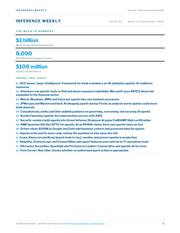
| | | $1 billion Merck and Google Cloud partnership |
| | | 8,000 Mott MacDonald AI agents created |
| | | $100 million raised by Ocient Series C |
|
| | | | | | | |
| Attackers are using agentic AI to turn leaked credentials into data theft within minutes: Microsoft reported that threat actors are using ARTEX, an agentic AI framework, to search public GitHub repositories for exposed credentials and API keys. The tools then analyse the results and carry out follow-on attacks with less human involvement. ARTEX began submitting large volumes of GitHub queries in August 2026. From October 28, 2026, Microsoft observed successful service principal sign-ins using valid leaked or stolen application credentials. In one case, an agent moved from searching GitHub to exfiltrating data from Azure Key Vault in five minutes. In a separate post, Microsoft said that in October 2026 it observed Storm-3358, a Cambodia-based intrusion cluster targeting financial organisations, using ARTEX alongside conventional tools to exploit flaws and install remote access trojans. Microsoft did not name the organisations targeted. Separately, Northflank told customers to rotate all secrets stored on its platform after an incident reported on October 30, and later confirmed unauthorised use of customers' AI API keys. The report does not link that breach to ARTEX. Wiz said it found at least nine incidents against AI development platforms in October. In two it investigated, compromised enterprise credentials drove about 2.5 million Amazon Bedrock API calls, roughly $100,000 in usage. Much of this week's coverage concerns how organisations govern their own agents. This story shows attackers already using agents in live operations. Microsoft recommends treating any publicly exposed credential as compromised, then revoking or rotating it and investigating its use. Its other recommendations are applying least privilege to workload identities, avoiding long-lived secrets in code and reviewing sign-in and audit logs. It cautions that attackers can change the traffic patterns defenders watch for. A separate field study found that only four of 25 security practitioners had exercised an AI or agent incident scenario. |
| | | | | | | |
| AMD and NVIDIA: AMD is showing its 6th Gen EPYC processors, built on the "Zen 6" architecture and 2nm process technology, in China for the first time at the China International Import Expo, alongside an Agentic PC on Ryzen AI Max Series processors that it says runs large models locally to protect privacy and cut token costs. NVIDIA says its Vera CPU delivers 60% higher performance per watt than a 96-core frequency-optimised EPYC Venice model and twice the agent speed of a 256-core model. Perplexity reports agentic coding tasks running 1.5 times faster, and DeepInfra reports up to 2.2 times its best x86 system. These are vendor and customer figures with no independent test and no AMD response, so buyers sizing CPUs for agent workloads should benchmark against their own workloads.
CrowdStrike: CrowdStrike is expanding its Falcon platform with an Agentic Security Platform in which agents investigate alerts and coordinate across endpoints, identities and cloud services. It is also adding SafeMind, which continuously tests an isolated copy of a live environment, and Falcon Guardian, which discovers and monitors agents, enforces rules and quarantines those that misbehave. It also announced a roughly $400 million acquisition of Fiddler AI, whose monitoring and governance tools it plans to bundle as Falcon Observe. With Gartner forecasting that agents in a single Fortune 500 company could grow from 15 in 2025 to 150,000 by 2028, agent monitoring is becoming a security product category. Experts quoted in the coverage caution that a platform cannot independently verify itself.
Google Cloud and Zoho: Google Cloud has added previews of self-learning enrichment and a conversational studio to Knowledge Catalog in its Agentic Data Cloud, plus cross-cloud natural-language queries of data on AWS and Azure. Google reports that agents using Knowledge Catalog were nearly four times more accurate and used up to 75% fewer tokens, figures not independently verified. Zoho has added semantic and ontology layers, a six-agent architecture for Ask Zia, MCP connectivity and governance controls covering data access, AI cost monitoring and lineage to its Analytics product, with pricing unchanged. Zoho's cloud features are available now, previews follow over four to eight weeks, and on-premises updates are expected in the first quarter of 2027. Both launches compete on giving agents governed business context rather than on model capability.
Kong, Cyara and Klearcom: Kong has expanded AI Management in Kong Konnect with an AI Registry for models, agents, MCP servers and tools, AI Gateway 2.3, Kong Identity for authorising agents, a Token Vault that brokers credentials at runtime so agents need not hold them, and cost management supporting budgets, showback and chargeback. Cyara's new platform evaluates 100% of live AI agent conversations against each enterprise's own policies. Klearcom's places real calls over local networks to test AI voice agents after launch. No launch dates, pricing or named customers are given, and scale figures are the companies' own. Together the launches show tooling forming around running agents in production, not just building them.
Black Duck and Google: Black Duck has introduced Signal Agentic Fix, which triages security findings, generates fixes, rescans and submits changes that a developer must approve before merging. A version for Claude Code is in Early Access. Google has open-sourced EGM, a plugin that has coding agents draft and review a specification before any code is written. Google says thousands of its engineers use it, though the README states it is not an officially supported Google product, and the coverage notes heavy token use and no accuracy benchmark. Both tools keep a human approval or review step, which matters because accountability for agent-written code stays with the developers and organisations that ship it.
SemiAnalysis GDPx: SemiAnalysis released GDPx on November 2, 2026, a benchmark of 206 tasks across 11 professional domains with realistic environments and a default eight-hour limit per task. It ranks 13 models. Claude Opus 5.5 leads at 12.0%, followed by Gemini 4 Carbon at 10.9% and GPT-6 Astra at 9.6%. The authors say the low top score reflects deliberate frontier-level difficulty. For executives, it is a useful reference point against vendor claims: on long, realistic professional tasks, the leading models currently complete only a small share. |
| | | |
| Anthropic: Anthropic's expected IPO could become the largest in history and the first public listing of a company focused solely on AI. Its filing says it plans to spend $895.4 billion on commitments and leases, mostly for computing and infrastructure, and reports a net loss of $80.75 billion alongside exponential growth in the first half of 2026. A potential $1.5 trillion valuation would require years of strong execution, and some analysts doubt revenue can grow enough to meet those commitments. The listing matters beyond Anthropic because it is seen as a test of the AI sector's financial viability and could set a public-market benchmark for other AI companies, though the report cautions that it may not automatically benefit the wider industry.
Gartner on model costs: Gartner analysts estimate that nine in ten enterprise agent workflow steps are routine and can be handled by open-weight models at parity for a quarter of the cost of the cheapest closed model. Against using a frontier model for every step, open models may cost as little as one-twentieth as much, although verbosity and retries can cut the saving to five or six times per task. They expect 90% of enterprise operational agent workflow steps to run on open-weight models by 2030, which would leave for-profit model-makers competing for a smaller share of agentic AI activity. The analysts say cost savings are secondary to keeping control over workflow data.
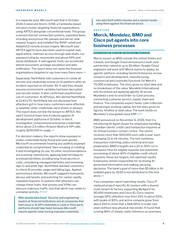
Merck and Google Cloud: Merck and Google Cloud announced a multi-year partnership valued at up to $1 billion to deploy an agentic platform, including Gemini Enterprise, across research and development, manufacturing, commercial and corporate functions for Merck's 75,000 employees. The story gives no start date and no breakdown of the value. The deal shows the scale of spending large enterprises are now committing to agentic AI, although the announced benefits are expected rather than measured.
Bank deposits and agentic commerce: One analysis argues that AI agents could make it easier for depositors to move money to higher-yield accounts, noting that Muse reaches banking platforms through Plaid, which links more than 150 million consumer accounts and 12,000 U.S. financial institutions. It advises banks and credit unions to strengthen deposit products and says the window to respond may last months rather than years. Separately, J.P. Morgan Payments and Mastercard joined a $15 million Series A in Firmly, which connects retailers to AI shopping channels and charges merchants $2,000 to $15,000 a month. Together, the stories show payments firms investing in agent-led transactions while banks face the prospect of the same technology making deposits easier to move.
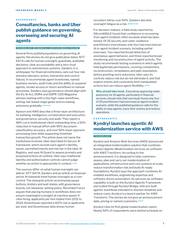
Kyndryl: Kyndryl launched an agentic AI modernization service with AWS, which Simply Wall St says supports its push into higher-margin cloud, AI and cybersecurity services but does not remove the drag from older, lower-margin contracts. According to the article, Kyndryl is seeking to maintain fiscal 2027 guidance of constant-currency revenue flat to down 2% while improving earnings and cash generation. Investors will watch for new signings and better profit metrics, particularly in Kyndryl Consult and hyperscaler-related revenue, which makes this launch a test of whether agentic services can shift the company's revenue mix.
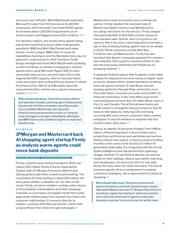
Cisco: Cisco IT replaced project-specific AI clusters with a shared AI factory, citing fragmented GPU capacity, hard-to-forecast token costs and power and cooling limits. It reports average GPU utilization rose from 15% to about 50%, and active compute grew from about 250 to more than 1,568 GPUs in under two years without new physical real estate. Cisco found that running 80% of steady-state inference on-premises was the most cost-efficient approach. For executives budgeting for agents at scale, the case shows infrastructure utilization and inference placement becoming material cost decisions. |
| | | |
| Merck and Google Cloud: Merck (known as MSD outside the United States and Canada) and Google Cloud announced a multi-year partnership valued at up to $1 billion. Google Cloud engineers will work with Merck teams to deploy an agentic platform, including Gemini Enterprise, across research and development, manufacturing, commercial and corporate functions for Merck's 75,000 employees. The story gives no start date and no breakdown of the value, and it reports expected benefits rather than measured results. It is one of the largest disclosed commitments this week to embedding agents across a whole enterprise rather than in a single function.
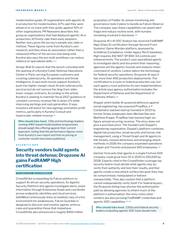
CrowdStrike: CrowdStrike announced a roughly $400 million acquisition of Fiddler AI and plans to bundle its monitoring and governance tools as Falcon Observe. The deal accompanies the expansion of CrowdStrike's Falcon platform, which includes Falcon Guardian for discovering, monitoring and quarantining agents. It shows a major security vendor buying in agent oversight capability rather than building it. Experts quoted in the coverage caution that a platform cannot independently verify itself.
Firmly: The Seattle-area startup raised a $15 million Series A led by Squarepoint Capital, with J.P. Morgan Payments, Mastercard and Samsung Next participating, taking total funding to about $20 million. Mastercard is also a commercial partner. Firmly handles the merchant side of Mastercard Agent Connect, and Mastercard is recruiting merchants for the service. The story gives no valuation or round date. The investment shows a card network and a major bank's payments arm backing infrastructure that lets AI assistants complete purchases while retailers keep their payment providers and customer relationships.
Dark Matter Technologies: Dark Matter acquired the AI agent platform and related intellectual property of House Numbers. According to Dark Matter, House Numbers' agents have operated on live mortgage files for two years and processed loans for more than 100 lenders. The technology will join Dark Matter's Empower loan origination ecosystem. It extends automation from document validation and verification routing to more complex loan-processing tasks, under lender-defined permissions, human oversight, access limits, a compliance blocklist and audit trails. Mortgage lenders on Empower should expect agents to take on a wider share of loan processing.
Doppel: Doppel, which builds AI-powered defences against social engineering, acquired PropRise, a Y Combinator-backed startup founded in 2023 that had reached high-six-figure annual recurring revenue. No purchase price was disclosed. Founders Jean-Michael Diei and Matthew Krager join Doppel's engineering organisation. The deal is a talent-led acquisition by a company that passed 300 employees and expanded in Japan and Toronto in 2026.
Harness: Harness, which says it serves seven of the world's 10 largest financial institutions, acquired Augment Code and introduced Software Factory, extending its platform from code creation through to delivery. Harness positions the move around governance controls such as role-based access, policy guardrails and deterministic verification, alongside phased adoption and human oversight. Its reported customer results, including Citi cutting deployment cycles to seven minutes, come from Harness and are not independently verified. |
| | | the magazine  | Inference Weekly / Issue 45 Read This Week as a Magazine. Every story in this issue, laid out across 17 pages and designed to be read properly. Yours to keep and to share. |
|
| | | |
| Dark Matter Technologies: The mortgage technology company has acquired the AI agent platform and related intellectual property of House Numbers, whose agents, according to Dark Matter, have operated on live mortgage files for two years and processed loans for more than 100 lenders. The technology will join Dark Matter's Empower loan origination ecosystem. Its agents can monitor loan files, respond to outstanding conditions, make recommendations and communicate with borrowers and lenders by email, text and voice. They work within lender-defined permissions and under human oversight. Dark Matter lists its safeguards as limits on agent access and actions, a compliance blocklist, confidence-based review controls and audit trails. The deal takes Dark Matter's automation beyond document validation and verification routing into more complex loan-processing work, in a regulated process where those controls will matter to lenders.
Finshape: Finshape has launched Agentic DBOS (ADBOS), which adds agentic AI to its Digital Bank Operating System to help banks analyse, design, develop, test and launch digital services. The system is already in use, including in projects for OTP Group, and the first digital application built with its agents is in production. Finshape says initial production versions of digital services in recent projects went live in 6 to 7 months, against 9 to 12 months for comparable MVPs developed previously. These are company figures. DBOS is used by more than 100 banks worldwide, so the agentic layer has a large existing installed base to reach. Finshape positions ADBOS as predictable, auditable AI that stays under the bank's control.
10x Genomics: 10x Genomics has commercially launched Sentira Single Cell, a cloud application for analysing Chromium data in natural language, powered by Anthropic's Claude models and built on 10x Cloud. The agent drafts an analysis plan for researchers to review and refine, runs the analysis and returns results. Methods and code are recorded in an editable, reproducible notebook. The product is available now with promotional credits and consumption-based pricing. It shows how life sciences vendors are building agents around reproducibility and researcher sign-off rather than fully autonomous analysis.
Partly: Partly launched PartlyRepair AI at SEMA 2026 for US collision repair shops, with six specialised agents live. The agents review estimates against OEM procedures and flag potentially incorrect or missing operations and parts, compare supplier options by price, speed and quality and help place orders, and reconcile invoices and follow up on credits owed. Partly says its proprietary model, Interpreter, draws on licensed OEM build sheets and data covering more than 1 million vehicle configurations and was developed over six years. The launch applies agents to administrative work across a repair job, from intake to job close, in a sector that depends on vehicle-specific data.
Bosch Rexroth: Bosch Rexroth introduced Agent iXi on November 5, 2026, within its ctrlX AUTOMATION environment. The agent can turn a natural-language task and a drawing into axes, kinematics and an IEC-61131-3 PLC program, and can configure inputs and outputs, connecting to engineering tools through Model Context Protocol. Communication is encrypted and authenticated, and the agent's access is limited by the logged-in user's permissions. Bosch Rexroth is working with AMD on hardware for local AI execution with ctrlX OS. For manufacturers, this moves AI from answering questions to carrying out engineering steps, with control tied to existing user permissions. |
| | | |
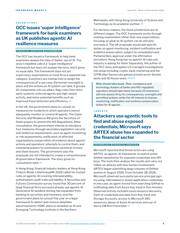
| OCC: The Office of the Comptroller of the Currency has issued a framework to help bank examiners assess the risks of banks' use of AI. It does not set supervisory expectations or treat AI as a separate risk category. Examiners are instead told to weigh the consequences of a use case, the human oversight in place and the actions an AI system can take. The framework groups 16 components into six pillars and flags risks from third-party systems, external agents and high-speed activity. It also notes potential benefits such as improved fraud detection and efficiency. No issue date was given. For banks, this means AI will be judged through existing examination by what a system can do and who oversees it, so documenting permitted actions and oversight matters more than new compliance categories.
UK government: The government plans to consult on measures for incidents in which operators cannot adequately monitor or control AI agents. The Cyber Security and Resilience Bill gives the Secretary of State powers to amend the NIS Regulations. After consultation, the government intends to introduce four measures through secondary legislation:
- security and resilience requirements, such as agent monitoring or risk assessments
- notification of affected organisations
- preservation of evidence about agents' actions and operators' attempts to control them
- ministerial powers to commission technical reviews and share lessons
The government says the proposals are not intended to create a comprehensive AI governance framework, and no consultation date has been given. NIS-regulated operators should expect specific duties on agent monitoring, incident notification and evidence preservation, subject to consultation and Parliamentary approval under the affirmative procedure.
Hong Kong: Financial industry leaders at Hong Kong Fintech Week x StartmeupHK 2026 called for trusted rules on agentic AI covering interoperability, authorisation, audit trails and liability. A Securities and Futures Commission survey found that 30 percent of large financial firms surveyed already use agentic AI. Generative AI sandbox testing has expanded from banking to securities and insurance. The government plans to consult this year on a legal framework to detect and remove deepfake advertisements. Hong Kong has no agentic AI rules yet, so firms operating there are deploying ahead of regulation that industry itself is now requesting.
Agent incident resilience: A field study reported by SiliconANGLE found that confidence in recovering from AI agent incidents often exceeds what has been tested. Of 25 security and cyber-resilience practitioners interviewed, only four had exercised an AI or agent incident scenario, including partial exercises. Two reported broad detection of anomalous agent behaviour, and three reported broad monitoring and reconstruction of agent activity. The study recommends testing scenarios in which agents hold legitimate permissions before granting more autonomy. Those scenarios should cover containment, reconstruction, remediation and safe resumption. Zanders, in a whitepaper for financial institutions, similarly calls for agent inventories, named business owners, audit trails and the ability to suspend agents or return workflows to manual processes. It says governance should align with the EU AI Act, DORA and GDPR. Boards approving wider agent autonomy have little evidence that recovery plans have been tested.
Microsoft (ARTEX threat to financial sector): Microsoft reported that attackers are using ARTEX, an agentic AI framework, to search public GitHub repositories for exposed credentials and carry out follow-on attacks with less human involvement. In one case, an agent moved from searching GitHub to exfiltrating data from Azure Key Vault in five minutes. In October 2026, Microsoft observed Storm-3358, a Cambodia-based intrusion cluster targeting financial organisations, using ARTEX alongside conventional tools. Microsoft recommends treating any publicly exposed credential as compromised, then revoking or rotating it and investigating its use. The speed involved shortens the window between a credential leak and a material breach. |
| | | |
| Microsoft (ARTEX): Microsoft reported that attackers are using ARTEX, an agentic AI framework, to search public GitHub repositories for exposed credentials and API keys, then carry out follow-on attacks with less human involvement. In one case an agent moved from searching GitHub to exfiltrating data from Azure Key Vault in five minutes. In a separate post, Microsoft said Storm-3358, a Cambodia-based intrusion cluster targeting financial organisations, used ARTEX alongside conventional tools in October 2026. Microsoft recommends treating any publicly exposed credential as compromised, then revoking or rotating it and investigating its use. Organisations holding cloud or AI credentials in code now face a much shorter window between exposure and abuse.
Northflank: Northflank told customers to rotate all secrets and credentials stored on its platform after an incident reported on October 30. It said customers should assume environment variables had been decrypted and secrets stolen, and it later confirmed unauthorised use of customers' AI API keys. Northflank has not disclosed how attackers got in or how many customers were affected, and the report does not link the breach to ARTEX. Wiz said it found at least nine incidents against AI development platforms in October. In two it investigated, compromised enterprise credentials drove about 2.5 million Amazon Bedrock API calls, roughly $100,000 in usage. Credentials held on third-party AI platforms are now a direct cost and data risk.
Regulators (OCC and UK): The OCC has issued a framework to help bank examiners assess the risks of banks' AI use. It does not set new supervisory expectations or treat AI as a separate risk category. Instead, examiners will weigh the consequences of a use case, the human oversight in place and the actions an AI system can take. In the UK, the government plans to consult on measures for incidents in which operators cannot adequately monitor or control AI agents. These would be introduced through secondary legislation under the Cyber Security and Resilience Bill and would cover agent monitoring, notification of affected organisations, preservation of evidence about agents' actions, and ministerial powers to commission technical reviews. Banks and NIS-regulated operators should expect to show what their agents can do, who oversees them and what records they keep.
Agent incident readiness: A field study reported by SiliconANGLE interviewed 25 security and cyber-resilience practitioners and found that confidence in recovering from agent incidents often exceeds what has been tested. Only four had exercised an AI or agent incident scenario, including partial exercises. Two reported broad detection of anomalous agent behaviour, and three reported broad monitoring and reconstruction of agent activity. The study recommends testing scenarios in which agents hold legitimate permissions, covering containment, reconstruction, remediation and safe resumption, before granting more autonomy. Executives approving wider agent use should ask whether recovery has actually been rehearsed.
CrowdStrike: CrowdStrike is expanding its Falcon platform with Falcon Guardian, designed to discover and monitor agents, enforce rules and quarantine those that misbehave. It also announced a roughly $400 million acquisition of Fiddler AI, whose monitoring and governance tools it plans to bundle as Falcon Observe. Gartner forecasts that agents in a single Fortune 500 company could grow from 15 in 2025 to 150,000 by 2028. Experts quoted in the coverage caution that agents create a new attack surface and that a platform cannot independently verify itself, so buyers will still need separate assessment of agent controls.
Uber: Uber described its Secure AI framework, which records each agent's identity, owner, permitted intents and risk tier in the Uber AI Registry, and uses AI Guard to assess prompts and proposed actions at runtime. Uber says traditional identity and authorisation controls can establish access rights but cannot judge whether an action is appropriate in context. It also says its controls reduce risk but do not eliminate it, and that explicit intents and constraints can reduce agent flexibility. This is a working model for firms deciding how to register and police agents, with its trade-offs stated openly. |
| | | Prefer to read it as a magazine? Issue 45 is a 17-page PDF. | |
|
| | | |
| Firmly: The Seattle-area startup has raised a $15 million Series A led by Squarepoint Capital, with J.P. Morgan Payments, Mastercard and Samsung Next participating, taking total funding to about $20 million. Firmly connects retailers' existing online stores to AI assistants and marketplaces, so purchases can happen inside third-party apps while retailers keep their payment providers and customer relationships. It handles the merchant side of Mastercard Agent Connect and charges merchants $2,000 to $15,000 a month. Retail customers include Best Buy, Furniture.com and Backcountry. The company says integrations now take a day or less, compared with four to six weeks in 2024. This matters because two major payments players are now investing in agent-led checkout, and retailers can sell through agents without giving up control of the customer.
Adobe: Adobe has made CX Enterprise Coworker, an agentic system for marketing teams, available in ChatGPT as a plugin, Claude, Databricks Genie, Gemini for business and Microsoft Copilot, with Amazon Quick, IBM and Snowflake expected soon. It supports campaign analysis, audience forecasting, customer journey optimisation and work planning, with human oversight. It is built on Model Context Protocol and Agent2Agent and ships with pre-built connectors for partners including Amazon Ads, Demandbase, Meta campaigns and Snowflake Cortex AI. For marketing leaders, this means marketing agents can now work inside whichever AI platform the organisation already uses, rather than only inside a single vendor's suite.
Glance: InMobi's agentic AI personal shopper aims to learn users' proportions, preferences and wardrobes and to surface fashion before they search. It reports nearly 13 million monthly active users in the US and 2.5 million AI-generated styles a day. It is integrated with Siri AI and Apple Intelligence and has partnerships spanning Google, Android TV and PayPal. Brands can train its model on their catalogues. Glance says better matching and visualisation cut returns by 15% for one early brand, which it does not name. The service points to discovery moving ahead of search, which would affect how fashion brands win attention and manage returns. The returns figure is a single company claim.
Consumer AI agents and bank deposits: One analysis argues that AI agents could make it easier for depositors to move money to higher-yield accounts, even though banks have said they resist letting external agents transact. It notes that Meta's Muse reaches banking platforms through Plaid, which links more than 150 million consumer accounts and 12,000 U.S. financial institutions. It cites Meta executives' reported figures of more than 10 million Muse users in the U.S. and Canada, about 2.5 million daily active users, and shopping use by more than a quarter of weekly active users. The article advises banks to strengthen deposit products and says the window to respond may last months rather than years. For consumer banking leaders, the same agent behaviour that drives shopping could also speed up rate shopping.
SAP Business Network: SAP says its network, which it describes as the world's largest business-to-business marketplace, facilitated more than US$8 trillion in commerce across over 940 million transactions in the 12 months to the third quarter of 2026. SAP's stated aim is for the network to become an intelligence and execution layer for commerce, where AI working on shared trading-partner data can recommend and carry out actions such as alternative sourcing or distribution plans. This is a stated vision rather than a reported result. It signals that agentic commerce is reaching procurement and supplier relationships as well as consumer checkout. |
| | | |
| Stanford University: At its inaugural Future of the Legal and Medical Professions Symposium, speakers said education in both professions should teach adaptability, critical thinking and judgment, not just how to use current tools. They warned that overreliance on AI can stop students acquiring skills, weaken existing abilities or lead them astray. Stanford researchers found that legal AI tools marketed as free of hallucinations made errors 17% to 33% of the time. Panelists also asked how young lawyers will gain experience if AI takes over entry-level tasks. That question applies to any function where AI absorbs junior work.
Thomson Reuters Institute: A webinar on verifying AI-generated legal work followed a case in which a New Mexico defence lawyer submitted an unchecked AI summary of a murder appeal transcript. The summary included nonexistent witnesses and testimony that was never given. The state Supreme Court held him in contempt, fined him and referred him for disciplinary review. Kirsten Talmage set out four steps: form an independent analysis before prompting, use AI to enhance rather than replace judgment, check claims against original sources, and investigate discrepancies. Mark Martin summarised a similar approach as employ your own research, retain independent judgment and verify. For leaders, verification is now a skill staff need to be trained in, with personal consequences when it is skipped.
AWS: David Yanacek, a senior principal engineer at AWS who works on agentic AI and safety, says strong engineers now need to be "paranoid and lazy". By paranoid he means anticipating what could go wrong when agents act unsupervised. By lazy he means avoiding repetitive manual work. He says coding is no longer the main bottleneck. Agents can generate code, run tests and fix problems, while people focus on design discussions and complex reviews. He uses an "auto-trust" file to set which actions agents may take alone and which need approval. This points to a shift in engineering roles towards review, risk judgment and setting rules for agents.
Recruitment: Recorded Future describes a hiring "doom loop". Applicants use generative AI to apply for more jobs, and employers automate to cope with the volume. Applicants per hire tripled from 2021 to 2024, and Greenhouse reported a 412% rise in applicants per post. Meanwhile, 91% of HR departments report using AI in recruitment, and Greenhouse data shows human recruiters fell by over 50%. The article says the result can be less meaningful evaluation, slower hiring and greater exposure to scammers. HR leaders should check whether human review in their hiring process still works at current volumes.
AMD: Through its "Spring Rain Program", AMD works with Chinese universities to create AI training labs and innovation centres. The programme brings its ROCm and Ryzen AI platforms into teaching and research. Projects on display at the China International Import Expo included East China Normal University research on protein structure recognition. The programme puts AMD's own software platforms into university AI teaching and research.
Hong Kong: HSBC plans to establish an AI and Emerging Technology Institute in the Northern Metropolis, with Hong Kong University of Science and Technology as its academic partner. Separately, Longbridge Group's AI arm has signed a three-year partnership with Hong Kong Cyberport Management Company to set up a Hong Kong AI Lab. The lab will bring together financial institutions, technology companies, academic institutions and start-ups. Talent and ecosystem development is one of its four stated areas. Both initiatives link financial-sector firms directly with academic and talent development in Hong Kong. |
| | | |
| Exposed credentials are now exploited in minutes: Microsoft reported attackers using the ARTEX agentic framework to find exposed credentials on public GitHub. In one case an agent moved from searching GitHub to exfiltrating data from Azure Key Vault in five minutes. Storm-3358, a Cambodia-based cluster, used the same framework against financial organisations in October. Separately, Northflank told customers to rotate all stored secrets and later confirmed unauthorised use of AI API keys. Wiz found that compromised enterprise credentials in two incidents drove about $100,000 of Amazon Bedrock usage. Microsoft's advice is to treat any publicly exposed credential as compromised, rotate it and investigate how it has been used.
Supervisors are focusing on what agents can do: The OCC framework tells examiners to weigh a use case's consequences, the human oversight in place and the actions an AI system can take, without setting new supervisory expectations. The UK plans to consult on duties for NIS-regulated operators covering agent monitoring, incident notification and preservation of evidence about agents' actions. No consultation date has been given. In Hong Kong, industry leaders are asking for rules on authorisation, audit trails and liability. These themes match this week's published guidance, including Zanders' call for agent inventories, named business owners, audit trails and the ability to suspend agents or revoke their access.
Controls are becoming products, but recovery is largely untested: Kong, Cyara, Klearcom, NinjaOne, ScienceLogic, ConnectWise and CrowdStrike all launched tools to inventory, monitor, restrict or approve agent actions. CrowdStrike also announced a roughly $400 million acquisition of Fiddler AI for monitoring and governance. Yet in a field study of 25 security practitioners, only four had exercised an AI or agent incident scenario. Recorded Future argues that placing humans in workflows does not ensure meaningful oversight at machine speed, and Zanders lists oversight fatigue as a risk. Before agents are given more autonomy, the study recommends testing containment, reconstruction, remediation and safe resumption in scenarios where agents hold legitimate permissions.
Most performance claims remain unproven: Cisco and Mott MacDonald reported operating results, and both also describe work on infrastructure or governance. Cisco cites GPU utilisation and token costs, and Mott MacDonald is building a central library to manage overlapping or inactive agents. Merck, Mondelēz and BMO have published only targets or expected benefits. The following are all company statements with no independent verification in the stories:
- NVIDIA's Vera figures against AMD
- Google's accuracy benchmarks
- Ocient's throughput figures
- Harness's Citi figures
- Kyndryl's survey results
No story this week gave independent data on whether agent-written code is more or less secure than human-written code.
Two developments to watch: The first is the timing of the UK consultation. The second is agent-led commerce. Mastercard and J.P. Morgan Payments have backed Firmly, while one analysis warns that agents could make depositors quicker to move money for better rates and puts the window for banks to respond at months rather than years. |
| | | | | | | |
Governance | Following Zanders and Uber guidance, require every AI agent to have a named business owner, a registry entry and a tested ability to suspend it or revoke access, since a SiliconANGLE-reported study found only four of 25 practitioners had exercised an agent incident scenario. |
| Investment | Fund shared infrastructure before adding agents, as Cisco reports raising average GPU utilisation from 15% to about 50% through a shared AI factory, and Mott MacDonald is building a central AI library to handle overlapping or inactive staff-built agents. |
| Focus | Make credential hygiene this week's priority and stop leaving long-lived secrets in code, since Microsoft saw an ARTEX agent move from GitHub search to Azure Key Vault exfiltration in five minutes and Northflank told customers to rotate all stored secrets. |
| Partnerships | Ask vendors such as Kyndryl, Google Cloud, Ocient and NVIDIA for independent evidence before signing, because their headline claims, from modernisation survey results to agent accuracy and CPU speed, are company-reported, and test chips and platforms against your own workloads. |
| Compliance | Have risk and compliance teams map current AI use against the OCC examiner framework's focus on consequences, oversight and permitted actions, and prepare for the UK consultation on agent monitoring, incident notification and evidence-preservation duties under the NIS Regulations. |
|
| | | | | The Whole Issue, Page by Page Take Inference Weekly 45 With You. Read it, keep it, forward it to your team. No sign-up, no gate. |
| | | | | Stay Curious · Stay Building · Stay Ahead AI News Weekly · davidsoden.com |
|